Dressmaker Guide
How the Sketchbook Works in Dressmaker
Learn how to combine bodices, skirts, sleeves and collars, choose Pattern variants, and understand how those choices affect Style, Fabric use and unlocks.
Game data build 25482629. Every part count, pattern name, variant and panel count on this page is read from the game.
Before the fabric
What the Sketchbook Does
The Sketchbook is where you decide the structure of the dress before cutting fabric.
Fabric, cutting and accessories all come later, and every one of them works on the shape you commit to here. That is why the order matters more than the speed. A structure chosen carelessly is inherited by every stage after it.
- Choose partsbodice, skirt, sleeve, collar
- Choose Patternthe shape of each part
- Choose Variantthe cut of that shape
- Continue to Fabriccolour, type and cost
Behind that screen sits a catalogue of 178 patterns, 236 construction variants and 1871 panels between them. The Sketchbook buys nothing. There is no shop on this screen — it is the design book the fabric store is later asked to fill.
Dress structure
The Four Dress Parts
A dress is assembled from four kinds of pattern. Two of them are the core of it, and two depend on the design.
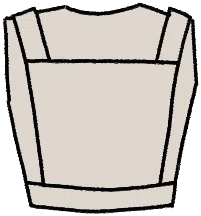
Bodice
Core partForms the upper body of the dress. There is always one, because a dress cannot be a skirt on its own.
Example: Apron Bodice
67 patternsBrowse Bodice patterns
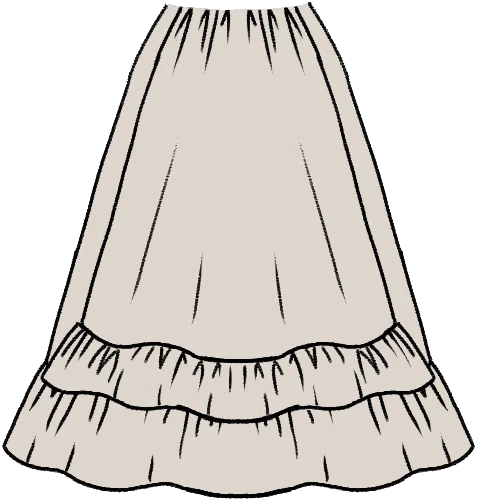
Skirt
Core partForms the lower body. It usually carries the larger share of the cut, which is why the skirt is often where fabric is won or lost.
Example: Apron Skirt
56 patternsBrowse Skirt patterns
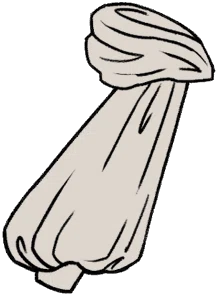
Sleeve
Optional partAdds sleeve structure when the design has sleeves. Leaving it out is a design decision, not a gap.
Example: Angel Sleeve
34 patternsBrowse Sleeve patterns

Collar
Optional partAdds a collar when the design has one. Usually the smallest part, and still a slot of its own.
Example: Belladonna Collar
21 patternsBrowse Collar patterns
The four slots hold 67 bodices, 56 skirts, 34 sleeves and 21 collars.
The sleeve and collar slots are never simply empty. The catalogue ships one pattern per optional part that cuts nothing at all — No Sleeves and No Collar — so "no sleeves" is a decision the Sketchbook records rather than a box it is still waiting on.
Selection
How to Choose a Pattern
There is no best pattern. There are five things worth checking, and the first one is not a number.
- ShapeDoes it look like the dress you want? This is a creative game first. A pattern that scores well and looks wrong is still the wrong answer.
- Style contributionSome patterns add Style directly, before any cloth is chosen. Read the tags whenever the brief names a Style.
- Fabric useTotal panel area and panel count decide how much cloth a shape takes, and the catalogue publishes both as bands a filter can read.
- ConstructionHow many panels it cuts, and whether any of them lie on the bias. Counts, not a rating — the game publishes no difficulty, so this page does not invent one.
- Unlock statusSome patterns arrive through a relationship. Planning around a locked pattern is the one mistake that stops a dress before it has started.
Read them in that order. Opening with the numbers is how a dress ends up passing its brief while disappointing the person who asked for it.
Two words, two things
Pattern vs Variant
A pattern is the design. A variant is one version of it. The two are easy to read as one thing, and they decide different parts of the dress.
Pattern
The main garment design for one dress part: its silhouette, its own Style tags and the slot it fits into.
Variant
A version of that pattern with its own panel layout and its own construction details, and so its own fabric estimate. The pattern is what you recognise; the variant is what you cut.
A real pattern from the catalogue
Bustier Bodice
One pattern, 3 variants
Variant 1
12 panels
Variant 2
14 panels
Variant 3
16 panels
Same shape, different construction, and a different amount of cloth. Which one a dress is built from is recorded per dress, not per pattern.
A variant is not a picture swap. These four things can differ between two variants of the same pattern:
- Panel count
- Fabric estimate
- Bias-cut panels
- Construction layout
51 of the catalogue's 178 patterns ship more than one variant. The rest cut one way only.
The game does not name its variants, so this site does not either: they are Variant 1, Variant 2 and so on, in the game's own order.
Consequences
What Your Pattern Choice Affects
Four things move when a pattern changes, and only one of them is visible on the mannequin.
Shape
Changes the structure of the dress: silhouette, neckline, volume and length.
Style
Some patterns contribute Style directly, before a single metre of cloth is chosen.
Fabric use
Panel area and panel count decide how much cloth the shape needs, and therefore what it costs.
Progression
Some patterns unlock through character relationships, so the catalogue available to you keeps growing.
Pattern
Shape · direct Style
Fabric
Colour · type · cost · weighted Style
The pattern decides what the dress is; the fabric decides what it is made of. Both feed the Style score, and both do it by their own rules.
Accessories come after both. They decorate the finished dress and can add more Style or answer a commission requirement, and they are not one of the four parts.
Before the fabric
Patterns Carry Style of Their Own
A pattern is more than a silhouette. It ships its own additive style tags, and they count whether or not the fabric agrees with them.
A real pattern's own tags
Jacket Bodice
- Eclectic +25
- Warm +25
- Daywear +15
- Elaborate +10
- Cool -5
The tags are signed, so a pattern pushes a Style down as well as up — Jacket Bodice carries -5 for Cool as well. A pattern is a profile, not a bonus.
If the brief names a Style, filter the catalogue by it instead of guessing:
A pattern's tags are one of the three sources of a Style score. Weighted fabric and accessory contributions are their own subject.
Cloth
Patterns Decide How Much Fabric a Dress Takes
Fabric use is not one number per shape. It comes out of the total panel area and the number of panels a variant cuts.
That is why more panels is not automatically more cloth. A few large panels can outweigh a pile of small ones, and every estimate on the pattern pages is measured rather than counted.
Two real bodices, compared
More panels
Front Lace Bodice
13 panels · Medium fabric use
2 on the bias
Fewer panels
Ruffle Apron Bodice
9 panels · High fabric use
Front Lace Bodice cuts more panels than Ruffle Apron Bodice and still lands in a lower fabric band. Panel count is a count; fabric use is measured.
Fabric bands across the catalogue
- Low60 patterns
- Medium59 patterns
- High59 patterns
Panels the base variant cuts
- 0–2 panels40 patterns
- 3–5 panels28 patterns
- 6+ panels110 patterns
Bias-cut panels
23 patterns cut at least one panel on the bias, and 77 of the catalogue's 1871 panels carry the game's own bias flag. Bias is a property of the piece, not of the cloth that fills the slot.
Progression
Some Patterns Unlock Through Relationships
Not every pattern is available from the start. The unlock state is part of choosing, rather than a surprise after choosing.
40 patterns are available from the start, 117 arrive through a character relationship, and 21 have no documented route in the export.
Bias Cut Skirt
Available
Relationship unlocks run from level 1 to level 5, and 2 patterns sit at the top of that ladder.
Example structure
Building a Simple Dress Structure
One structure the game itself validates, part by part, to show how the four slots fit together.
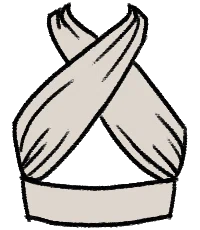
Bodice
Twilight Hour Bodice
5 panels
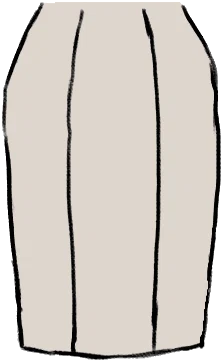
Skirt
Pencil Skirt
6 panels

Sleeve
No Sleeves
Not used

Collar
Peter Pan Collar
1 panel
12 panels across 4 parts
Structure chosen → next: choose fabrics
This is an example structure, not a recommended build. It is here to show that a bodice, a skirt and a collar are a complete dress, and that the sleeve slot can be left off on purpose.
What goes wrong
Common Pattern Selection Mistakes
Five ways a structure is chosen badly, and the check that answers each one.
- Choosing only by appearanceAppearance matters, but check Style, Fabric use and unlock status before committing if you are working towards a commission. A dress that looks right and misses a named Style is a rework.
- Ignoring the variantDifferent variants can have different construction and different fabric needs. Deciding on the pattern and picking the variant by habit is the same mistake as choosing a pattern by name alone.
- Assuming the pattern decides all the StyleThe final Style also depends on the fabrics and the accessories. A pattern's tags are the first contribution, not the whole score.How the Style score is built
- Planning around a locked patternCheck the pattern's unlock before you build a dress around it. The relationship level behind a pattern is on its own page, and so is the alternative you can use today.Check an Unlock
- Committing to a structure before reading the briefIf you are working on a commission, read the requirements before you commit to the dress structure. The brief names the Styles it wants, and it is far cheaper to answer them with the pattern than with the fabric.Read the Commission Requirements
Next in the workflow
Choosing Fabric
The structure is chosen. The next decision is cloth, and it is the one that changes the dress's colour, cost and weighted Style.
Next: Choosing FabricTry it in the Dress Builder
The same four slots, scored live against a brief, with the Style and fabric totals in front of you while you swap patterns.
Pattern Finder
This page explains the structure. Picking a specific pattern — filtering 178 designs by part, Style, fabric use and unlock — is the finder's job.
Where to go from here
Guides and tools for choosing a structure
The step before this one, the step after it, and the pages that take over once a structure exists.
About this guide
This page is the Dressmaker Sketchbook guide: what the Sketchbook is for, how a dress is built from a bodice, a skirt and optionally a sleeve and a collar, how a Pattern relates to a Variant, and what those choices change about Style, Fabric use and unlocks. Every count, pattern name and panel number on it is read from the same generated rows the pattern pages print.
It is deliberately not the pattern finder, not one pattern's page and not the dress builder. Browsing 178 designs, evaluating a single pattern's variants and assembling a finished dress are three separate jobs with three separate pages, linked from here rather than repeated.
The Dressmaker guide holds this page and the rest of the walkthrough in one place.