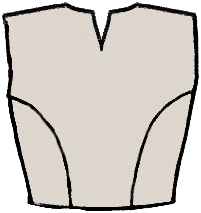
Choose a version
A version changes how the part is cut, which changes the cloth and the panels behind the score.
Dressmaker Workbench
Build a dress piece by piece and see what it becomes before you commit. Choose a bodice, a skirt, sleeves and a collar, give each part its own fabric, pin the details on, and watch the style scores, cloth, cost and unlock warnings move with every change.
178 patterns · 352 fabrics · 331 decorations · scored with the build's own engineGame build 25482629
Current goal: Free Build
Dress workbench
Four parts, one cloth each, and a tray of details.
Choose a version
A version changes how the part is cut, which changes the cloth and the panels behind the score.

This part cuts no panels, so it adds no cloth and no cost — but the pattern itself still carries style.
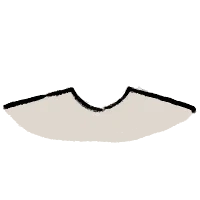
This part cuts no panels, so it adds no cloth and no cost — but the pattern itself still carries style.
Fabric is assigned per part, the way the game cuts it — a bodice and a skirt can wear different cloth. A part that cuts no panels contributes no cloth at all.
Decorations
Details are placed on the finished dress, not on one part. Each one adds Elaborate, and each further placement of the same style counts a little less.
No decorations yet.
Bows, flowers and trim all carry styles of their own — and every placement is one point of Elaborate.
Take this dress to the fixer and see the smallest change that passes.
Let the solver hand over a whole validated dress instead.
Take this dress to the fixer and see the smallest change that passes.
Let the solver hand over a whole validated dress instead.
Dressmaker Workbench
Not an estimate: the four rules below were solved from the game's own validated solutions and reproduce them to the last decimal.
A bodice, a skirt, sleeves and a collar speak for the dress in a fixed ratio — 7, 8, 3 and 2 — and a part that cuts no panels leaves that sum entirely. Panel area only decides how a part's cloth is shared between two fabrics inside it.
The first bow carries its full style weight, the second counts 0.85 of it, the third 0.85 again — and the ranking is per style, so the same two details can order differently for Cute and for Formal. Every placement, path trim included, is one point of Elaborate.
Cloth is what the game's own estimate says for those cuts. Cost charges the same shape with a smaller per-panel term and multiplies it by the cloth's price — which is why a cheaper fabric can cut the bill without changing a single style score.
The pickers draw on the public catalogue alone, and anything behind a relationship level or a prestige level is marked rather than hidden, so an unlock warning is always something a player can actually go and get.
Dressmaker Workbench
Yes. The workbench runs the arithmetic solved from the game's validated solutions, so a dress it scores 58 on is a dress the game scores 58 on. Quality is the one rule it refuses to guess, because grain, fit and sewing accuracy are not decided by which pattern and fabric you picked.
Yes — fabric is assigned per part, the way the game cuts it. Two cloths on one garment is normal in Dressmaker, and each part's cloth speaks for its own share of the dress's style.
"No Sleeves" is a real pattern with a score of its own, amounting to Cool +10 and Simple +10. Leaving the part empty puts it on for you, which is why a sleeveless dress can still be a Cool dress, and why the numbers do not change when you load the same build back.
As many as you like, but they do not add up evenly. Each style's placements are ranked by weight and the k-th counts 0.85^k, so ten bows are worth more than two and far less than ten bows' worth.
Yes. Choose the brief as your goal and the workbench prints its requirements with the current value, the target and the gap on every one — the same rows the brief page shows, measured on the dress in front of you. When something is short, "Fix this dress" takes the whole build to the fixer.
No. You choose and the workbench reports; the Commission Solver is the tool that proposes a complete valid dress, and the Dress Fixer is the one that repairs a dress you already have. Three tools, three answers, and they hand over to each other rather than repeating each other.
The workbench is the middle of three tools. It builds, the fixer repairs, the solver proposes.
A Dressmaker dress is four parts — a bodice, a skirt, sleeves and a collar — and each part is a pattern cut in one of its versions, wearing a fabric you choose. The pattern decides the base style profile and how much cloth the part takes; the fabric decides the rest of the style and the price; the decorations decide Elaborate and fill in whatever else the client asked for.
This builder puts all three on one bench so a choice can be judged before it is made. Style scores, estimated cloth, material cost, unlock warnings and commission requirements move together as you change a pattern, a version, a fabric or a detail — and the resulting address bar is the dress, so a build can be shared as a link, kept in the browser, or handed to the Dress Fixer to find the smallest change that passes.