
93% less estimated fabric
Lowest estimated fabric use among Bodices
Glamour +35 · Risqué +35
Unlock source not documented
Fabric calculator
Pick a cut, or open the dress you built, and the estimate is broken down by part, by cloth and by variant — with what each swap would change before you make it. When the bolt is nearly empty, start from the amount you have left instead and see what still fits it.
178 patterns · 236 cuts · 352 fabrics · build 25482629
A whole dress is the sum of its parts, and a leftover is cloth you have already paid for. Start with the question you actually have.
Every cut the game can make for this part, lightest estimate first. Each row is priced at its own lightest variant.
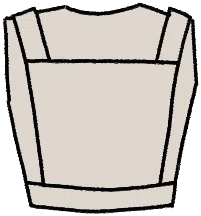











Total fabric estimate
0.76
7 panels · 1 part
Based on the selected patterns and their panel layout.
The panel areas the estimate is built from, exactly as the game records them. They are not the estimate and are not meant to be read as a total on their own.
Which part takes the cloth. Shares are of this garment's own estimate.
Shares are of this cut alone, not of the whole garment. Bias cut is the game's own per-panel flag; it is a fact about construction, not an extra charge on the cloth.
| Panel | Grain | Bias cut | Share of the cut |
|---|---|---|---|
| Undershirt Front | Straight grain | Not bias cut | 35% of the cut |
| Undershirt Back | Straight grain | Not bias cut | 32% of the cut |
| Bodice Front | Straight grain | Not bias cut | 9% of the cut |
| Bodice Strap Left | Straight grain | Not bias cut | 8% of the cut |
| Bodice Strap Right | Straight grain | Not bias cut | 8% of the cut |
| Apron Belt Front | Straight grain | Not bias cut | 5% of the cut |
| Apron Belt Back | Straight grain | Not bias cut | 3% of the cut |
One row per cloth, however many parts wear it. A dress cut from one cloth is one row, not four.
This is a cut rather than a dress, so no cloth is assigned to it. How much cloth a cut needs does not depend on which cloth you choose — the cloth decides the cost and the style, not the amount.
Every way this pattern ships, measured against the cut on the bench.
Variant 1 uses 0% less estimated fabric than variant 2.
One swap at a time: what the garment looks like if this part is cut differently.
Nothing to weigh against yet — pick a pattern first.
Same part only — a bodice is not an alternative to a skirt, it is a different hole in the dress.
Lighter cuts of the same part, each with the style it moves. A pattern's styles do not depend on the cloth or the cut, so the trade is the trade.
93% less estimated fabric
Lowest estimated fabric use among Bodices
Glamour +35 · Risqué +35
Unlock source not documented
93% less estimated fabric
Eveningwear +30 · Glamour +30
Unlock source not documented
93% less estimated fabric
Glamour +30 · Elegant +25
Unlock source not documented
93% less estimated fabric
Professional +20 · Simple −20
Unlock source not documented
The estimate is the total area of the panels in the selected cuts, plus a cloth allowance over that area, plus a fixed allowance for every panel. It is the game's own arithmetic rather than an approximation of it.
More panels do not mean a bigger garment — a ruffled bodice and a plain one can cover the same body and still need different amounts of cloth, because every panel carries its own extra allowance. That is why the panel count is printed beside the estimate instead of being folded into a rating.
Total fabric estimate
Money and style belong to other pages; this one answers how much cloth a cut or a garment needs, and what the cloth you have left can still be cut into. It counts no decorations, because a decoration is laid on rather than cut from cloth, and it converts the estimate into no real-world unit, because the game records none.
Where this number is spent.
Why the estimate behaves the way it does:How fabric usage is calculated
Common questions
The total area of the panels the pattern cuts, plus a cloth allowance over that area, plus an allowance for every panel. Panel count matters as much as outline, so two bodices that cover the same body can need different amounts — which is why the panel count is printed beside the estimate rather than folded into it.
A variant is a different set of panels rather than a restyle of one. A second variant of a bodice can cut two more panels, and each of those brings its own area and its own allowance. Switching variant is the first thing to try when the cloth is short, and it costs nothing but the style the game attaches to each cut.
Nothing extra is charged for it. A bias panel is priced on its own area like any other panel of the same size, and no multiplier is added anywhere on this page. Bias is carried through as a flag and a grain direction, and the count is printed so you can see it without it being turned into a number it is not.
Enter what you have left in the planner and it compares that amount with every cut it can price, marking each row as likely to fit, close, or short by estimate. Read the result as a planning answer: the arithmetic measures panel area and does not test whether the panels would physically lie out on your piece of cloth.
Small parts first. A sleeve or a collar takes a fraction of what a bodice or a skirt does, and the planner is ordered to spend your cloth rather than to find the biggest pattern it can fit — so the top of the list is the cut that gets closest to using all of it.
It is usually the best use of it. An Off-the-Rack dress is sewn and sold rather than commissioned, so the cloth comes back as coin instead of sitting on a shelf, and the sale price is estimated on a page of its own before you spend the fabric.
Because the two formulas are not the same one. Usage charges the panel area, a cloth allowance over it and a per-panel allowance; cost charges the panel area, a smaller per-panel figure, and multiplies the result by the cloth's price. Multiplying the usage figure by the price lands close to the game's number and never on it.
Estimating fabric for a dress
The fabric calculator turns a pattern into a cloth figure. Pick a cut — bodice, skirt, sleeve or collar — or open the whole dress you built in the workbench, and the page prices every panel that pattern cuts.
Every figure comes from the game's own arithmetic: the total area of the selected panels, plus a cloth allowance over that area, plus a small allowance for each panel in the cut. That is why the panel count matters. Two bodices with the same outline and different panel counts do not need the same amount of fabric, and the difference is visible here rather than hidden inside a rating.
Because the estimate is per pattern and per variant, swapping one pattern for another is a calculation rather than a guess. The comparison table puts two cuts side by side on panels, estimated fabric, the difference and bias-cut panels, and the lower-fabric shelf names what a lighter cut costs in style — the styles a pattern moves are published by the game, so the trade is stated instead of implied.
The result is the amount of fabric the game charges for a cut, not a measurement in metres or yards: the game data records no real-world unit, and inventing one would be a guess dressed up as a number. Fabric choice changes what a dress costs and how it scores; it does not change how much fabric it takes.
What to do with leftover fabric
Leftover cloth is a budget rather than a remainder. Enter the amount you have and the planner prices every pattern against it, heaviest fitting cut first, so a small piece of silk is matched with the sleeve or collar it can actually become instead of with the bodice it cannot.
Two moves usually come out of it. Within a pattern you already own, a lighter variant is free to switch to, because a variant is a different set of panels rather than a restyle. Across patterns, a smaller part is the honest answer: a collar takes a fraction of what a skirt does, and cloth that is short of a whole dress is often enough for one.
If nothing in the catalogue fits, the cloth still has a use. A dress sewn Off-the-Rack is sold rather than commissioned, and the sale price calculator works out what that comes to — which is the step that turns leftover fabric back into coin.